Best Crypto for Everyday Spending in Australia
“Best” depends on what you're doing. For spendingcrypto at real Australian businesses — fees, speed, supply and whether it's actually accepted — here's how Bitcoin, Ethereum, XRP, Solana and USDC compare, and where THAT fits.
General information, not financial advice. Figures are factual and historical, as of June 2026.
At a glance
How They Compare for Spending
Each asset is good at what it was built for. The differences that matter for everyday spending are fees, settlement speed, supply, and how you actually pay a business.
| Asset | Point of Difference | Typical Fee | Settlement | Finality | Biggest Monthly Drop | Fixed Supply | Native AU Merchants |
|---|---|---|---|---|---|---|---|
| THAT | Natively Spendable | Free | ~2s | <5s | −3.6% | >200 | |
| BitcoinOn-Chain + Lightning | Store of Value | ~$0.10–$5.50 | ~10 min | ~60 min | −17.5% | ~190 | |
| Ethereum | Smart Contracts | ~$0.01–$10+ | ~15s | ~13 min | −32.0% | ~0 | |
| Solana | High-Throughput | <$0.02 | ~1–2s | ~13s | −36.1% | ~0 | |
| XRP | Speculative | <$0.01 | ~4s | ~4s | −29.3% | ~0 | |
| USDCCircle Stablecoin | 1 USDC ≈ US$1 | ~$0.01–$10+ | ~2–15s | ~5s–13min | ~0% | ~5 |
THAT's network fees are sponsored — free to you — in the THAT app. In other apps the THAT fee is typically <$0.01. Fees are shown in AUD and vary with network demand (Bitcoin and Ethereum can spike during congestion; USDC pays its host network's gas, so it ranges from cents to dollars on Ethereum). Settlement is the typical time to confirmation; full deterministic finality can take longer on some networks. “Biggest Monthly Drop” is the largest single calendar month's decline, measured month-close to month-close, since THAT launched (September 2024) — the same basis and window has been used fairly for every other asset listed. This is historical only and not a prediction of future performance. “Native AU Merchants” counts businesses that accept the coin natively — the merchant receives the coin itself, not Australian dollars via a card. Bitcoin's ~190 (BTC Map) spans its on-chain base layer (~110) and its Lightning network; Ethereum, XRP, Solana and USDC have no comparable native acceptance and are primarily spent via convert-to-AUD cards instead. THAT's figures are reflective of June 2026 — verify current figures before relying on them.
What actually matters
Spending Crypto in the Real World
Beyond price charts, these are the things that decide whether a coin is practical to spend day to day.
Merchant Acceptance
In Australia you can already 'spend' most coins — but almost always through a card or processor (like Crypto.com Pay) that sells your crypto and pays the merchant in Australian dollars. THAT is accepted on-chain, wallet-to-wallet, at 200+ businesses — the merchant actually receives crypto. Of the majors, only Bitcoin comes close (~190 venues, ~110 on-chain plus Lightning); Ethereum, XRP and Solana are rarely accepted natively at all.
Fees — and Who Pays Them
Fees on XRP, Solana and Polygon are a fraction of a cent; Bitcoin runs from cents to several dollars when the network is busy, and Ethereum gas swings just as widely. The THAT difference is who pays: the app sponsors network fees on your payments, swaps and transfers — so spending is effectively free, with no separate gas token to keep topped up. When THAT is used outside the THAT app, fees average a fraction of a cent.
Speed at the Register
For an in-person payment, waiting matters. THAT settles in about 2 seconds on Polygon. XRP (~4s) and Solana (~1–2s) are also fast; Bitcoin is the outlier — a payment typically isn't safe to rely on for 10–60 minutes, which is why shops use convert-to-cash rails for it.
How Much the Price Moves
A dollar-pegged coin like USDC stays close to one US dollar, so its price barely moves relative to USD. The rest are market-priced and can move up or down. In the window since THAT launched (September 2024), the worst single month for Bitcoin, Ethereum, XRP and Solana ran from roughly −18% to −36%. THAT's worst month over the same window was about −3.6%. Past movements don't predict the future — only spend what you're comfortable with.
Control & Reliability
Things to weigh for money you actually spend: USDC is issued by Circle, which can freeze or blacklist addresses; XRP has a large share concentrated in Ripple's escrow. THAT is non-custodial — you hold your own keys, and there's no central issuer who can freeze, blacklist or reverse your funds. And like any on-chain payment, transfers are final, with no chargebacks — so double-check the details before you send.
Fixed Supply
THAT has a fixed maximum supply of 3.3 billion tokens — much like Bitcoin's 21 million cap and XRP's fixed 100 billion. Ethereum and Solana have no hard cap, and a stablecoin's supply expands and contracts as it's minted and redeemed. Stablecoins like USDC/USDT represent the dollar itself — a currency with no supply cap that loses value to inflation over time.
Crypto Was Built to Be Spent
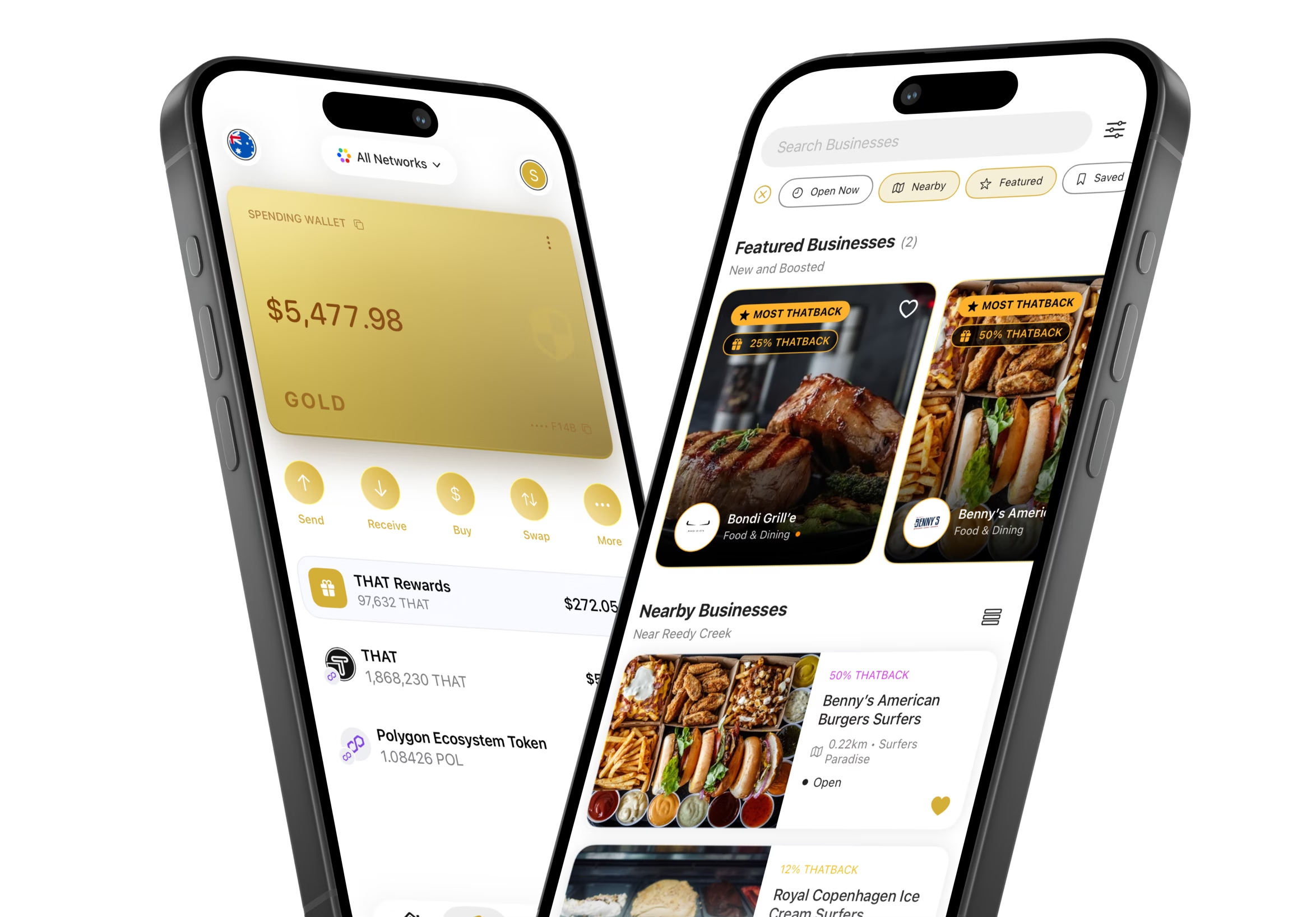
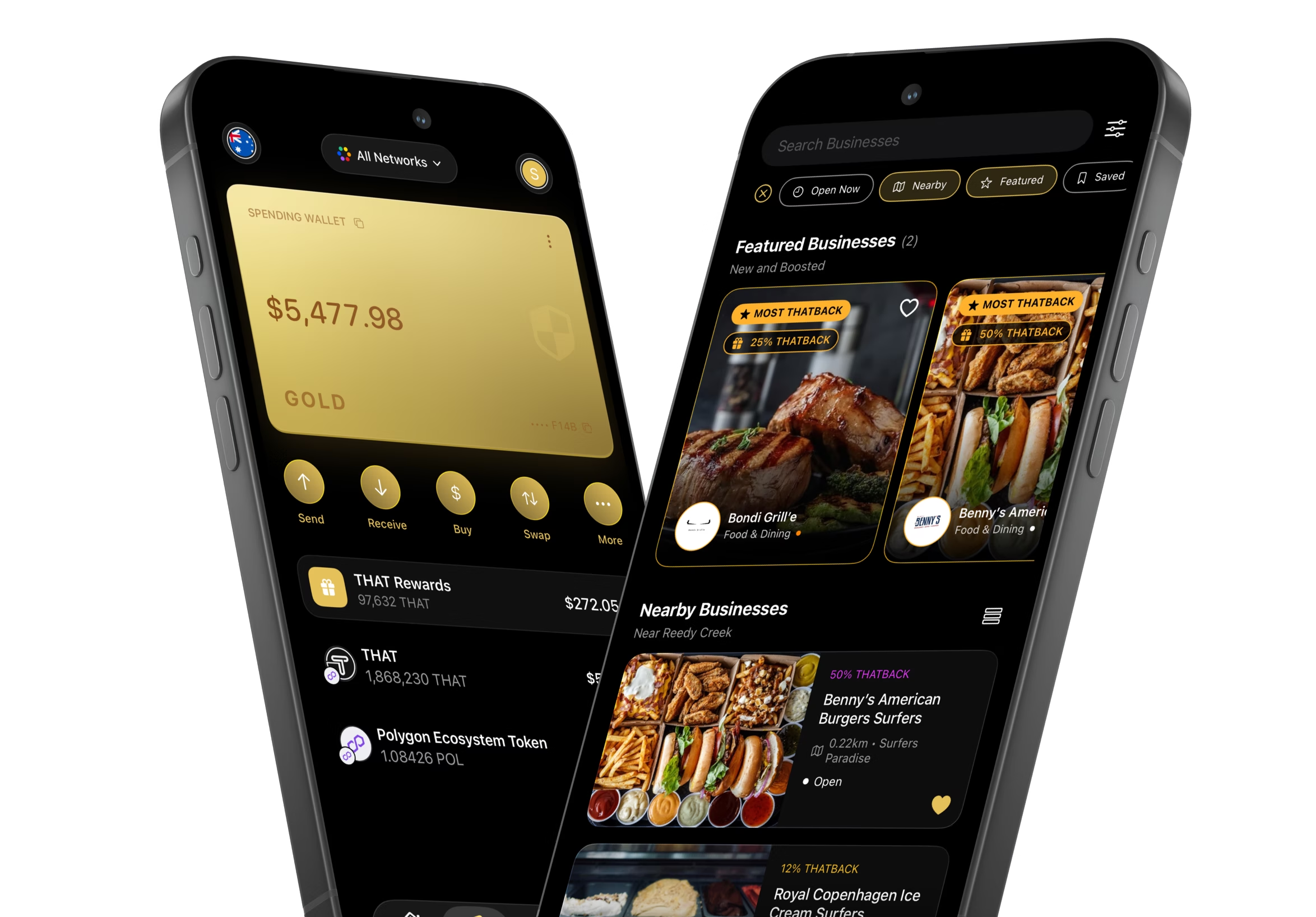
THAT is a fixed-supply, general-purpose crypto asset. The THAT directory app and the THAT non-custodial wallet app list numerous Australian businesses that accept THAT directly on-chain. Hold it, swap it, and spend it in the real world at your convenience with no middleman.
Spending Crypto in Australia — FAQ
What is the best cryptocurrency for everyday spending in Australia?+
It depends what you want. For a steady value at the checkout, a stablecoin like USDC avoids price swings. For actually paying a business on-chain — natively, wallet-to-wallet, with low or sponsored fees and a directory of places that accept it — THAT is built specifically for everyday spending in Australia.
Can you actually pay with Bitcoin in Australia?+
Yes, but usually indirectly. Most Australian businesses that 'accept Bitcoin' do so through a card or payment processor that converts it to Australian dollars at the point of sale, so the merchant receives AUD, not crypto. Direct on-chain Bitcoin acceptance exists but is a small niche, and a Bitcoin payment can take 10–60 minutes to settle.
Which cryptocurrency has the lowest transaction fees?+
XRP, Solana, and tokens on Polygon all have fees of a fraction of a cent. Bitcoin fees average cents but can spike, and Ethereum gas fees vary with demand too. In the THAT app, network fees on payments are sponsored, so spending is effectively gasless / free.
Is crypto widely accepted by shops in Australia?+
It's growing but still niche. Surveys put the share of Australians who have used crypto to buy goods or services at around 12% in 2026, mostly online. In person, acceptance is largely through convert-to-AUD cards and processors. THAT's approach is different — an in-app directory of businesses that accept crypto directly, on-chain.
What makes THAT different from Bitcoin, Ethereum, XRP or Solana for spending?+
Bitcoin, Ethereum, XRP and Solana are general-purpose assets — great at what they're designed for, but spent in Australia mainly by converting to dollars. THAT is genuinely accepted and used for everyday payments: a fixed-supply asset paired with a non-custodial wallet, sponsored (gasless) fees, and a directory of businesses that accept it directly on-chain.
Is this page financial advice?+
No — this is general information only, not financial, investment or tax advice, and not a prediction of future value. Do your own research and seek independent professional advice before making any decisions.
Become Part of the Crypto Economy
Pay with crypto, discover crypto-friendly businesses, or start accepting crypto today.
- 10K+
- App Users
- 250K+
- THAT Transactions
- 5.0
- Star Rating